Name the material
Start with steel, stainless, aluminum, wood, concrete or coating removal. The material narrows abrasive grain, bond and clogging concerns before product names enter the conversation.
How-to guides
This practical guide center turns common abrasive questions into a simple roadmap for safer selection, better surface results and clearer shop instructions.
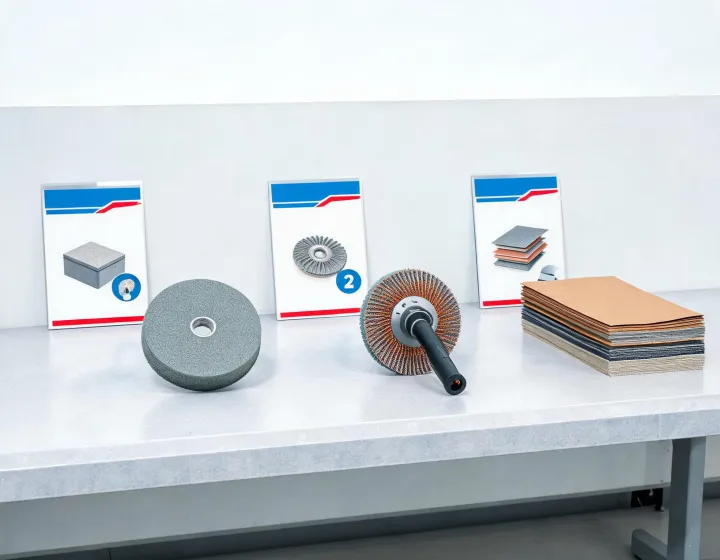
Roadmap
Start with steel, stainless, aluminum, wood, concrete or coating removal. The material narrows abrasive grain, bond and clogging concerns before product names enter the conversation.
Cutting, grinding, blending and finishing are different jobs. A wheel meant to cut should not be treated like a grinding wheel, and a finishing disc should match the scratch pattern you want.
Wheel diameter, rated speed, guard fit and power source shape the safe starting point. This is the moment to confirm RPM and whether the tool is right for the format.
Decide whether the job needs rough removal, weld blending, paint-ready preparation or a visible final grain. The finish target helps choose grit progression and pressure.
Guide cards
Use a thin wheel for clean cuts, keep the tool straight and avoid side pressure. Confirm rated speed before the wheel touches the work.
3 checksLet the wheel work. Heavy pressure can heat the surface, shorten wheel life and make a simple cleanup task harder to control.
15 degreesMatch grit and backing to the shape of the part. A flexible backing can help on contours, while a firmer style supports edge work.
4 grit bandsMove through grits with a purpose. Skipping too far can leave scratches that take longer to remove in the next pass.
Step downLearning support
Short talking points for customers comparing a worn wheel, a part number or a finish complaint.
Guides for prep, cleanup and blending that keep the abrasive decision tied to the weld result.
Simple reminders for mixed repair work where material and tool conditions change throughout the day.
Plain-language lessons for grit, bond, format and safe wheel handling that students can remember.
Ask a guide question
Send the material, tool and finish goal. The response can start with a practical guide path instead of a long catalog search.