The short answer
The emergency kit that saves jobs is small, boring, and built around the failures you actually see—not the tools you wish you had. If I had to build one truck kit for a contractor who needs to finish a deadline, I'd start with five things: Porter-Cable sandpaper for quick surface fixes, a Porter-Cable cordless nail gun if the crew is already on that battery platform, an impact-rated flip socket set for wheel and fastener emergencies, an M53 sump pump kit for water intrusion, and a sorted pack of hose clamps. On clamps, the most common sizes are #4, #6, #8, and #10; #6 and #8 cover most small coolant, air, and water lines. But check the printed range on the clamp, because brands don't always match.
That's the answer. The rest is why I stopped recommending giant emergency kits, and where this short list stops working.
Why I stopped building giant emergency kits
I coordinate emergency tool and material orders for a regional contractor supply company. I've handled 300+ rush orders in seven years, including same-day turnarounds for mechanical, restoration, and finish crews. When I first started building emergency kits, I assumed more tools meant more coverage. Load the truck with everything, and you can't get caught short. After a few expensive misses, I realized the opposite: a kit that's too big gets disorganized, and disorganized kits fail when you're under time pressure.
One Friday in March 2024, a restoration crew called at 4:10 p.m. They needed a sump pump kit, discharge hose, and clamps for a flooded basement. Normally I'd compare three vendors and confirm stock by phone. I had 50 minutes before their last driver left. I went with the M53 sump pump kit we already had on the shelf and added a clamp pack. It wasn't the cheapest option, but it was the one that made the truck. Missing that window would've pushed the drying start to Saturday morning and cost the client another night of equipment rental. That's the moment I stopped optimizing emergency kits for complete and started optimizing for find it in 60 seconds.
The five items that earn space
1. Porter-Cable sandpaper
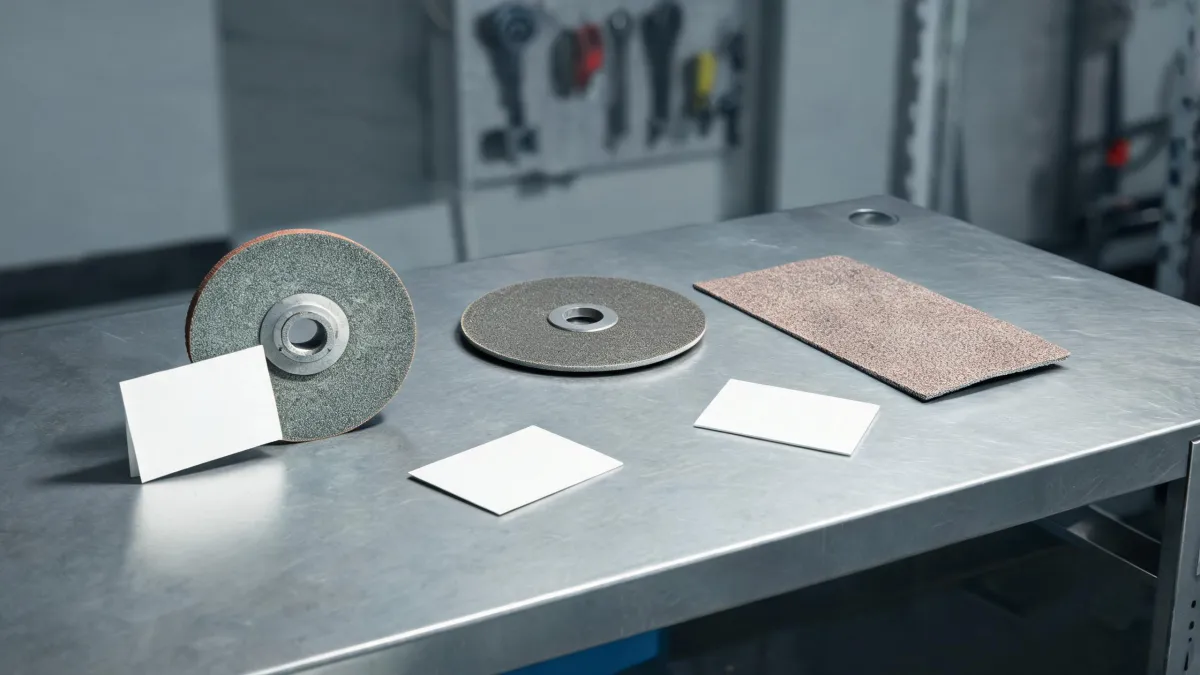
Sandpaper is the least glamorous item in the kit, which is exactly why it gets left off the truck. Porter-Cable sandpaper earns a spot because it's a consumable you burn through on punch-list work: sanding a sticking door edge, scuffing a patch, cleaning up a cut before trim. I keep a small range—80, 120, and 220 grit—in hook-and-loop discs or sheets that match the sanders the crew already runs. The mistake I see is buying one grit in bulk. You don't need 100 sheets of 80 grit if the job needs a finish pass. You need enough of each grit to get out of the driveway.
2. Porter-Cable cordless nail gun
If the crew is already on the Porter-Cable 20V battery platform, a Porter-Cable cordless nail gun is a practical emergency tool. It removes the hose and compressor from small trim repairs, which matters when you're trying to finish a punch list after the main crew has packed up. I don't treat it as a replacement for every pneumatic nailer on a production framing job. I treat it as the tool that lets one person fix a loose piece of trim without dragging out the compressor. Check fastener compatibility before you rely on it. A nail gun without the right nails is a paperweight with a battery.
3. Impact-rated flip socket set
An impact-rated flip socket set is one of those items you don't think about until a wheel, lug nut, or stubborn fastener stops the job. The flip design saves space, and impact-rated matters because regular chrome sockets can crack under an impact wrench. I keep a set in the truck kit for trailer lug nuts, equipment wheels, and those odd fasteners that show up on rental equipment. It's not a full socket set. It's the shortcut that keeps a tire change or equipment swap from turning into a two-hour parts run.
4. M53 sump pump kit
An M53 sump pump kit is worth the shelf space if you do restoration, plumbing, or basement work. The value isn't just the pump. It's having the discharge hose and clamps in one box when water is already on the floor. In a rush, people buy the pump and forget the hose, or they find a hose and discover the clamps are the wrong size. A preassembled kit cuts out that scavenger hunt. Check the pump's discharge size and the hose length before you need it. A kit that doesn't reach the drain is still a problem.
5. What hose clamp sizes are most common?
This is the question I get most often from crews building a truck stock list. The most common worm-gear clamp sizes are #4, #6, #8, and #10. If you stock only two, stock #6 and #8. They cover a lot of small coolant, air, and water lines.
- #4 — about 1/4 in. to 5/8 in. (7–16 mm). Small fuel, vacuum, and air lines.
- #6 — about 1/2 in. to 3/4 in. (13–19 mm). Heater hose, small coolant lines, and air hose.
- #8 — about 5/8 in. to 1 in. (16–25 mm). Radiator hose, pump discharge, and general water lines.
- #10 — about 13/16 in. to 1-1/2 in. (21–38 mm). Larger coolant and discharge lines.
Add #12 and #16 if you do pump work or larger hose repairs, but don't guess from the number alone. Ranges vary by manufacturer. I've seen crews grab a #8 because it looked right and then fight it because the printed range didn't match the hose. Buy stainless clamps for wet or outdoor work, and keep a few spring clamps if the application calls for constant tension.
How I audit the claims
Tool packaging is loud. Spec sheets are quieter and more useful. Per FTC advertising guidance (ftc.gov), performance claims should be substantiated, so I don't rely on box copy for runtime, torque, or compatibility. I check the printed spec sheet, the fastener or battery platform, and the return policy. That's especially true with cordless nailers and pump kits, where one missing adapter can stop the whole job.
What was best practice in 2020 may not apply in 2025. Cordless nailers have improved, battery platforms have consolidated, and emergency kits have gotten smaller and more targeted. But the fundamentals haven't changed: the tool you can find, power, and verify at 5 p.m. on Friday beats the tool that's technically better but buried in the shop.
Where this kit stops
This short list isn't a substitute for a full service body or a licensed trade's specific kit. If you're working on high-pressure hydraulic lines, OEM coolant systems, fire sprinkler components, or anything with a code-specified clamp, use the specified part. Don't swap a worm-gear clamp for an OEM spring clamp just because it's in the truck. And this was accurate as of Q1 2025—stock, pricing, and product ranges change. Verify current availability and the printed clamp range before you build a stock list around it.
The kit works because it's honest about what actually stops a deadline: a missing consumable, a dead battery platform, a wheel that won't come off, water where it shouldn't be, and a clamp that doesn't fit. Fix those five things, and you're not guessing when the clock is running.

Elise Fournier
Elise Fournier is an independent builders hardware and tool storage analyst covering hinges, handles, brackets, casters, drawer slides, door locks, hooks, tool boxes, chests, cabinets, carts, and bags. She references ANSI/BHMA A156.9 cabinet-hardware practices while examining cycle life, rated load, pull force, slide extension, caster capacity, corrosion finish, drawer retention, sealing, and transport ergonomics. Her selection guides help installers, workshops, and buyers plan durable fittings and storage around access, load, mobility, and environment.