I work as a quality manager for an abrasives company. I review roughly 200 product batches a year—wheels, flap discs, diamond blades—before they reach the customer. In Q1 2024, I rejected close to 4% of first deliveries. Most of those rejections came down to one thing: the label on the wheel didn't match the product in the box. That may sound like a paperwork problem. It isn't.
The question I hear most often goes something like this: which angle grinder is safer and why? People are comparing two tools and want me to pick one. I get it. Most buyers assume safety is built into the grinder itself. In my experience, safety is built into the system around the grinder. The tool matters. The abrasive on it matters more than most people want to admit.
The surface question: which angle grinder is safer and why?
If I had to give a one-line answer, it would be this: a grinder is safer when its guard is in place, its speed is controlled, and the wheel on it is rated for that speed and for the material being cut. The grinder's brand matters less than the match between the tool and the wheel.
To be fair, some grinders are designed better than others. A dead-man switch, a brake, a low-vibration handle—those help. But I've seen expensive grinders fail safely and cheap grinders work fine, simply because the operator picked the right disc. The reverse is much uglier.
What most people blame on the grinder is actually a wheel problem
When I get called about a grinder that 'grabbed' or a disc that shattered, I ask a few questions: What wheel was on it? What max speed was stamped on that wheel? Was it intended for the material? Had the wheel been dropped or stored in humidity? In my audits, the issue is usually the wheel, not the tool.
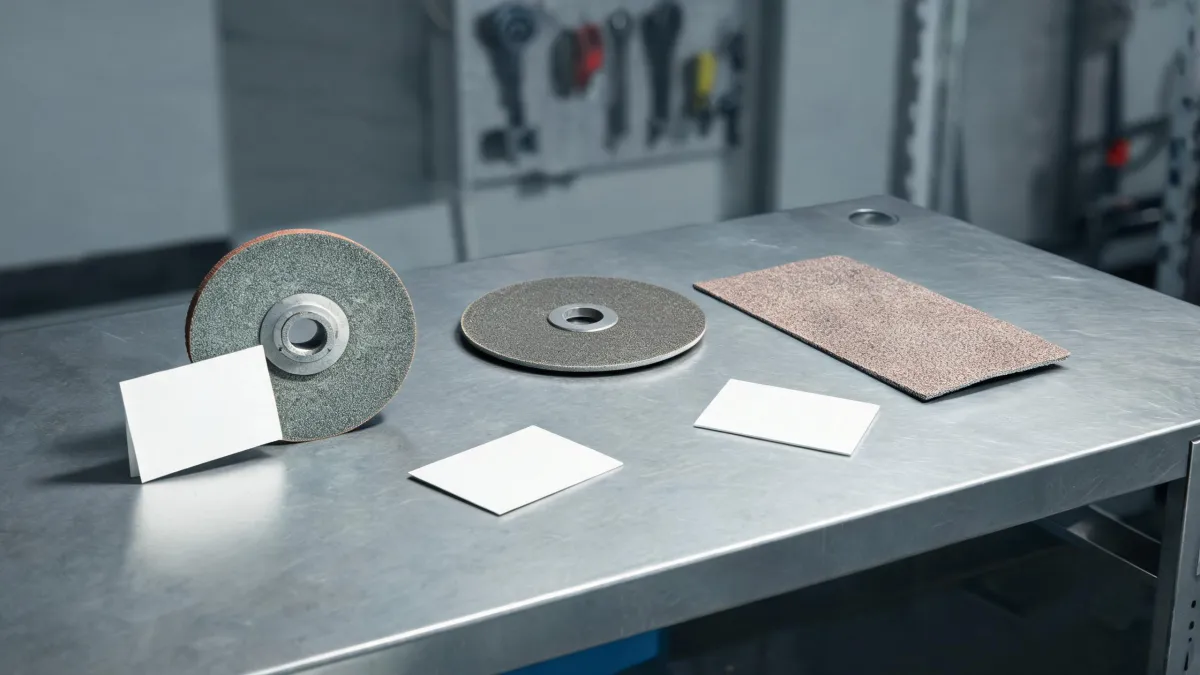
One comparison helped me see this clearly. When I put a properly rated 4-1/2-inch cutoff wheel next to a bargain wheel with no speed marking, I finally understood why the details matter so much. The first wheel gave me enough information to verify compatibility. The second one gave me nothing. You cannot manage what you cannot measure.
The deep cause: speed, material, and the invisible match
Speed: the number on the label is a limit, not a suggestion
Every abrasive wheel has a maximum operating speed. Every angle grinder has a no-load speed. The rule is simple: the grinder's no-load speed must be equal to or less than the wheel's max speed. ANSI B7.1 and OSHA 29 CFR 1910.215 both point in the same direction—do not exceed the rated speed of the wheel.
In my first year, I made the classic spec error: I assumed the tool's speed was lower than the wheel's rating. It usually is, until it isn't. I once mounted a wheel without checking the stamped max speed because 'it had always worked.' The wheel's rating was lower than the grinder's no-load speed. I caught it before pulling the trigger, but only because I looked at the label when I locked the guard. That was luck, and I don't recommend luck as a procedure.
Material: steel is not aluminum, and aluminum is not masonry
A grinding wheel is a composite cutting tool. It is formulated for specific materials. Use a steel wheel on aluminum and the aluminum loads up the pores. The wheel glazes, friction climbs, and the tool starts to grab. That is not the grinder's fault. It is a material-match problem.
I helped a friend restore an aluminum single wheel vintage caster—one of those old swivel casters with an aluminum wheel and a steel bracket. He had a grinding wheel left over from a steel project. On aluminum, it loaded up, got hot, and started to pull. He said the grinder was unsafe. It wasn't. The abrasive didn't match the material. We switched to a Norton aluminum-oxide flap disc, and the same grinder became smooth and controllable.
The grinder itself: what 'safer' actually means
If you press me on which angle grinder is safer and why, here is the honest answer: a smaller grinder is generally safer for a general workshop task than a bigger one. A 4-1/2-inch grinder has less wheel inertia and less contact area. When the wheel catches, there is less energy to jerk the tool. But that advantage disappears if you fit a wheel meant for a different speed or material.
Let me rephrase: the grinder's size matters because of inertia. The wheel's spec matters because of compatibility. Both have to line up. A 9-inch grinder with a 6,600 rpm no-load speed can be the right tool for a thick steel beam. It is the wrong tool for a quick edge cleanup. Using the smallest tool that can do the job is not just comfortable; it is safer.
What ignoring this costs
The cost is not just the price of a new grinder. I've seen a production line lose half a day because a mismatched wheel produced vibration that killed a bearing. I've seen a $600 'high-performance' grinder paired with the first disc someone found in a drawer. That puts a cheap, unverified wheel in front of an expensive tool and an unprotected operator.
Dust is part of the same problem. Dust hides the cut line and settles into motor vents. In a shop, grinding dust in the air is a health issue. That is why I treat dust control as a safety feature, not a convenience. For anyone using the Norton Abrasives støvbeholder—the dust container in Scandinavian catalogs—the first thing you notice is not the bag filling up. It is the dust missing from the air. That makes the work easier to see and the grinder easier to keep clean.
Where I land on Norton Abrasives and the 3x grinding wheel
For my own work, I choose abrasives that force me to respect the spec. A Norton 3x grinding wheel is a good example. It is a ceramic alumina blend that keeps cutting under sustained pressure. On carbon steel, it lasts noticeably longer than a standard aluminum oxide wheel under the same load. But that only matters if you use it for the right material and at the right speed. There is no such thing as a safe universal wheel—only a correctly specified one.
If you ask me which angle grinder is safer and why, my short answer is still the same: the one with a guard, a brake, and a wheel whose max speed is stamped clearly and is higher than the tool's no-load speed. The brand on the side of the grinder matters less than the match. But when you are buying abrasives, a brand that gives you traceable specifications makes the match easier. Norton Abrasives does that, and I say it as someone who checks incoming batches for a living.
The practical checklist
- Check the grinder label first. Its no-load speed must be equal to or lower than the wheel's max RPM.
- Match the abrasive to the material. Aluminum gets an aluminum-oxide disc, steel gets a steel-rated wheel, masonry gets a diamond blade.
- Use the smallest grinder that can do the job. Less inertia means less kickback energy.
- Keep the guard on and keep the wheel dry. A damaged wheel can fail at speed.
- Control the dust. If you have a Norton Abrasives støvbeholder or a similar dust collector, use it. It is a visibility tool and a health tool.
What was good-enough practice in 2020 is not good enough in 2025. The fundamentals haven't changed—speed compatibility, material match, guarding, dust control—but the execution has. A safer angle grinder is not a magic tool. It is a system of small, correct decisions made before you pull the trigger.

Maren Jorgensen
Maren Jorgensen is an independent hand tool and torque applications analyst covering wrenches, pliers, screwdrivers, hammers, sockets, ratchets, hex keys, and tool sets. She applies ISO 6789-1 torque-tool conformance principles while examining jaw capacity, leverage, fastener engagement, torque range, accuracy, handle geometry, and material hardness. Her practical guides help tradespeople and procurement teams select suitable tools, plan controlled tightening, and compare durability without relying on brand reputation alone.